Remember the “Slip, Slop, Slap, Seek, Slide” campaign? That last one (Slide) refers to sliding on a pair of sunnies, and it’s not just because it makes you look cool. With UV levels that regularly hit “dangerous” on the UV index, eye protection is a must-have in Australia.
But here’s the thing: quality sports sunglasses aren’t just about avoiding the squint of shame when you’re outdoors. They can genuinely improve your performance in ways that’ll make you wonder how you ever played without them. Let’s break down which sports demand proper eyewear and why your eyes (and your game) will thank you later.
Cricket
Standing in the field for six hours under the Australian sun is character-building. Trying to spot a rapidly approaching cricket ball against that same sun? That’s just cruel.
Good cricket sunnies do two jobs. First, they filter out the glare so you can actually track the ball without your retinas failing you. Second, they protect your eyes from the wind and dust that inevitably swirl around every oval come summer. Nothing feels worse than when you’re tearing up in the outfield because a dust devil just assaulted your face.
Wrap-around frames work best here. They keep the elements out and your vision clear, which is remarkably helpful when a 140 km/h leather projectile is heading your way.
Golf
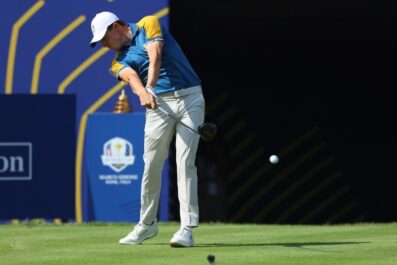
Here’s a secret the golf pros don’t advertise: those fancy brown or amber-tinted lenses aren’t just a fashion choice. They’re basically cheat codes for reading greens.
These tints enhance contrast and depth perception, making subtle slopes and breaks in the green suddenly visible. That barely-there gradient that you’d normally miss completely on a golf course? With the right sports sunglasses, it lights up like someone’s drawn you a proper map of the course.
Plus, you’re outside for four-plus hours in the direct sun. Your eyes need protection, and your playing partners need you to stop complaining about the glare on the 14th fairway.
Cycling
Cycling in Australia means dealing with dramatic light changes. One minute you’re squinting into blazing sunshine on an open road, the next you’ve plunged into a shaded bush track where you can’t see a bloody thing.
Enter photochromic lenses, the chameleons of the eyewear world. These clever bits of technology automatically darken in bright light and lighten in shade, adjusting just in time to see the rock in your way so you can avoid a nasty fall.
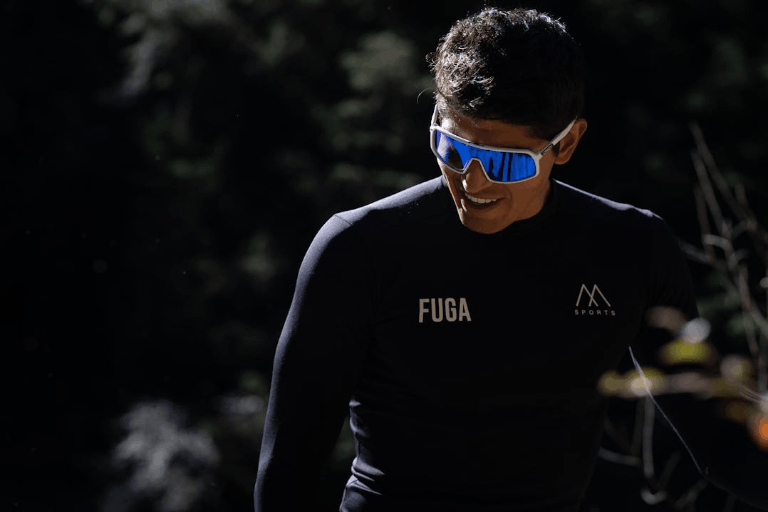
Cycling sunnies also protect you from wind (at 40 km/h, your eyes dry out fast) and from all the debris that roads and trails love to fling at your face. Bugs, dust, small rocks, you name it. Make sure you grab a pair of you cycle competitively or just for work.
Fishing
Polarised lenses for fishing are genuinely transformative. They cut surface glare completely, revealing fish, structure, and weed beds below the water. Anglers call it the “X-ray vision” effect, and once you’ve experienced it, fishing without polarised sunnies feels like trying to work with one eye closed.
The ability to actually see what you’re doing (and where the fish are lurking) gives you a massive advantage over everyone squinting at reflective water, hoping for the best. Plus, the Australian sun reflecting off water is particularly vicious. Hours of that glare without protection is a fast track to eye damage you’ll regret later.
Running
Nothing ruins a run faster than sunglasses that bounce with every stride or fog up the second you start sweating properly. Running demands sunnies that stay put and stay clear, no matter how hard you’re working.
Look for lightweight frames with grippy nose pads and temple tips that stick to your face. The lenses need proper ventilation too, because fogged-up eyewear at kilometre three defeats the entire purpose of wearing them. And yes, you need them even on cloudy days. UV rays don’t take holidays just because there’s cloud cover, and squinting for an hour does nothing good for your face or your concentration.
Tennis
Tennis is a fast game. The ball’s coming at you, the sun’s in your eyes, and you’ve got approximately half a second to decide if that shot’s on the line or out. High-contrast tints (grey or brown) make the yellow tennis ball stand out dramatically against the court surface, irrespective of whether you’re playing on hard court or grass.
Tennis also means rapid head movements and the occasional desperate dive for a return. Your sunnies need to stay locked on your face through all of it, which is where sport-specific frames with secure fits and no-slip grips come in clutch.
Parting Advice
Here’s the serious bit. Every sport listed involves potential high-velocity impacts. Cricket balls, pebbles from bike tyres, rogue fishing lures and whatnot. Your eyes are surprisingly vulnerable to all of it. Proper sports sunglasses use polycarbonate lenses that are virtually shatter-proof. When something hits your face at speed, the lenses absorb impact instead of fragmenting into your eye. They’re also lighter than glass, more scratch-resistant, and offer built-in UV protection. Not flashy, but essential.
The Australian sun doesn’t care about your sport of choice. It’s coming for your eyes either way. The difference is whether you’re just protecting yourself or actually improving your game at the same time.
Decent sports sunglasses aren’t cheap, but neither is squinting your way through eighteen holes or missing a catch because you couldn’t see the ball. And your optometrist definitely charges more than a good pair of sunnies.
Slide ’em on.