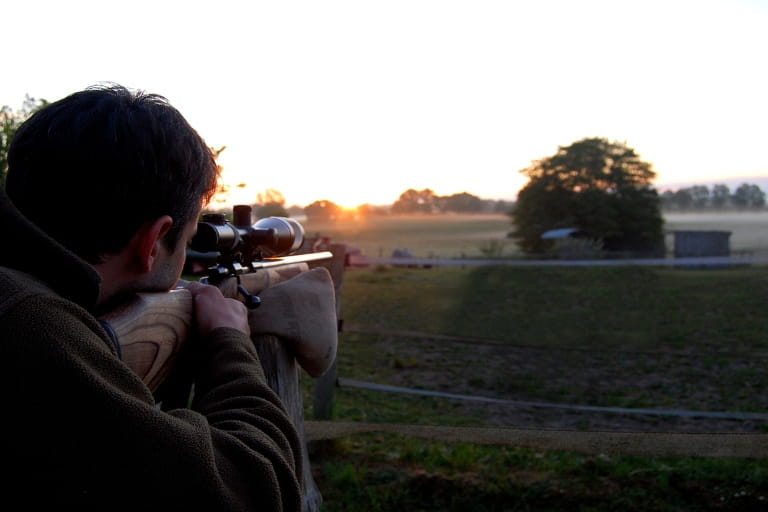
Accurate shooting depends on more than just a good rifle. A clear understanding of scope adjustments plays a major role in consistent results. Many shooters struggle with accuracy because they do not fully understand how their scope works. Terms like MOA, MIL, and turret clicks can feel confusing at first, especially for new users.
This guide focuses on scope calibration explained in a simple and practical way. Whether you are setting up an AR15 scope, using tactical scopes, or learning long-range shooting basics, understanding adjustments will help you shoot with more confidence and control.
Why Scope Adjustments Affect Accuracy
Every rifle scope is designed to help the shooter move the point of impact without changing the shooting position. Adjustments allow you to correct elevation and windage in measured steps. When these adjustments are used correctly, accuracy improves quickly.
Many accuracy problems come from incorrect calibration, not poor shooting skill. Once a scope is properly adjusted and zeroed, shot groups become tighter and more predictable. This is especially important for AR-style rifles and tactical shooting setups.
MOA vs MIL: What Shooters Need to Know
The most common adjustment systems are MOA and MIL. Understanding moa vs mil helps shooters avoid mistakes when dialing corrections.
MOA stands for Minute of Angle. At 100 yards, 1 MOA equals about 1 inch. MIL, or milliradian, equals about 3.6 inches at the same distance. Both systems work well when used correctly.
MOA is often found on hunting optics and many AR platforms. MIL is common on tactical scopes and long-range optics. The key rule is simple: your reticle and turret adjustments should match the same system.
Understanding MOA Size in Real Shooting
Knowing moa size makes scope adjustments easier and faster. Because MOA scales with distance, shooters can calculate corrections without complex math.
At 100 yards, 1 MOA is about 1 inch. At 200 yards, it becomes about 2 inches. At 300 yards, it equals roughly 3 inches. This pattern allows shooters to adjust based on how far their shots land from the target center.
For shooters using an AR15 scope at short to mid-range distances, MOA adjustments are intuitive and efficient.
How 1 MOA Adjustments Work on a Scope
Most scopes do not move 1 MOA per click. Instead, they use smaller steps. A common setup is 1 MOA adjustments divided into four clicks, meaning each click equals 1/4 MOA.
At 100 yards, four clicks move the impact about one inch. At longer distances, the movement increases proportionally. Knowing this prevents over-adjustment and wasted ammo.
Always confirm your scope’s click value before shooting. This information is usually printed on the turret or listed in the manual.
Scope Calibration Explained Step by Step
Zeroing a scope is the first and most important adjustment. Scope calibration explained simply means aligning the scope reticle with where the bullet actually hits.
Start by choosing a zero distance, commonly 50 or 100 yards. Fire a small group instead of a single shot. Groups provide more reliable information and reduce human error.
Measure the distance from the group center to the target center. Use MOA or MIL values to calculate adjustments. Make the correction, shoot again, and repeat until the group centers properly.
Using Tactical Scopes for Consistent Results
Tactical scopes are designed for repeatable and precise adjustments. Exposed turrets allow shooters to dial elevation and windage quickly. These features only work well when the shooter understands the adjustment system.
Many tactical shooters prefer dialing adjustments rather than holding over. This method improves consistency, especially at longer distances. Proper tracking and accurate clicks are essential for this approach.
Recording adjustments for different distances helps shooters return to known settings quickly and reduces setup time at the range.
Long Range MOA Tips for Better Precision
Following basic long range MOA tips can greatly improve performance. Always confirm zero before shooting long distances. Small zero errors become large misses at extended ranges.
Make slow and deliberate adjustments. Count clicks carefully and avoid rushing. Environmental factors like wind and temperature can affect bullet flight, so adjustments may need fine-tuning.
After each session, return the scope to zero. This habit prevents confusion during future shooting sessions and protects accuracy.
Common Scope Adjustment Errors
One of the most common mistakes is mixing MOA and MIL systems. Using an MOA turret with a MIL reticle leads to incorrect adjustments.
Another issue is adjusting based on single shots instead of groups. This often causes over-correction. Always adjust based on the average impact point.
Unsecured turrets can also cause problems. Make sure adjustments are locked or reset properly, especially when transporting the rifle.
Choosing the Right Scope for Your Setup
Not every optic fits every purpose. An AR15 scope used for general shooting may focus on fast target acquisition and simple adjustments. Long-range and tactical shooting require scopes with reliable tracking and clear markings.
Tactical scopes are built for durability and repeatability. While they may cost more, they offer better consistency for shooters who rely on precise adjustments.
Choosing the right scope means matching the optic to your shooting style and understanding how to use it correctly.
Final Thoughts
Learning how scope adjustments work is essential for accurate shooting. Understanding moa vs mil, knowing real moa size, and mastering 1 MOA adjustments builds confidence and reduces frustration.
With proper setup and practice, shooters using AR platforms or tactical optics can improve accuracy at all distances. Once scope calibration explained becomes familiar, making adjustments feels natural and controlled.
A well-adjusted scope turns a good rifle into a reliable and accurate tool. Take time to learn your optic, apply consistent methods, and accuracy will follow.